
Your Core Isn't Just for Ab Workouts


What People Get Wrong About “Core Engagement”
Most people associate core engagement with ab-specific exercises such as planks, crunches, leg raises.
And while those have their place, they miss the bigger picture.
Your core isn’t just something you train in isolation. It’s something you rely on in every movement pattern to maintain position, transfer force, and keep tension where it belongs.
If you’re only thinking about your core during ab workouts, you’re overlooking where it actually matters most.
What Your Core is Actually Doing
Your core’s primary role is stabilization.
It works to:
Keep your spine in a safe, efficient position
Maintain alignment between your ribs and hips
Allow force to transfer through your body without energy leaks
When this system is working well, your movement looks controlled and efficient. When it’s not, your body will find another way to complete the movement, usually by shifting into your low back or losing tension altogether.
What “Bracing” Actually Means
Bracing isn’t sucking in your stomach or just tightening your abs.
It’s creating a 360° sense of stability around your torso.
Think:
Ribs stacked over hips
Light tension through your entire midsection
The ability to breathe without losing position
This is what allows everything else, such as your legs, arms, and larger muscle groups, to do their job effectively.
If You’re Not Bracing, You’re Compensating
Once you understand this, you start to see it everywhere.
Form breakdown usually isn’t just a strength issue but a stability issue.
Below are four common movements where core engagement directly changes what you’re actually training:

Overhead Dumbbell Press
This is one of the clearest examples of losing position.
Without bracing:
Ribs flare
Low back arches
The press turns into a backbend
With proper bracing:
Ribs stay stacked over hips
Core stabilizes the torso
Shoulders press the weight efficiently
Think: Ribs down as you press up.
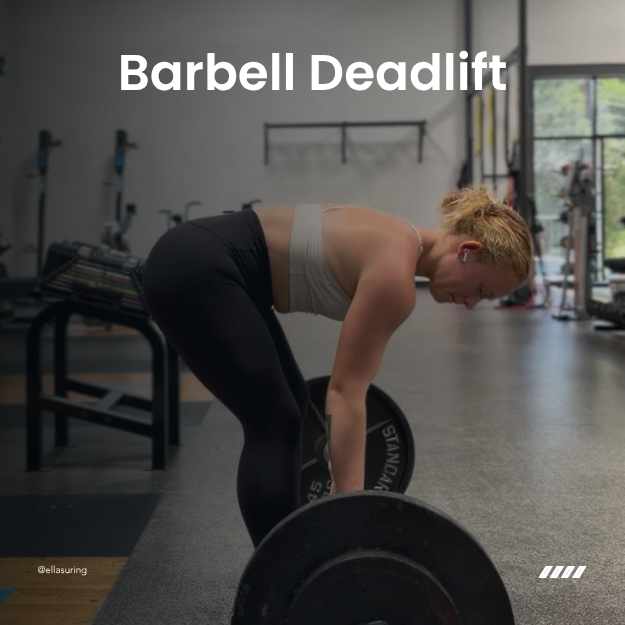
Deadlift
The deadlift depends heavily on your ability to maintain tension.
Without bracing:
Spine loses position
Tension drops before the bar leaves the ground
Load shifts away from the intended muscles
With bracing:
You create tension before the lift
Spine stays stable throughout
Force transfers efficiently
Think: Brace before you pull, not as you pull.

Overhead Tricep Extension
This is similar to the overhead DB press, but there are a few key concepts here we need to look at.
Without bracing:
Ribs flare
Low back compensates
Triceps lose tension
With bracing:
Torso stays stable
Arms move independently
Triceps are actually loaded
Think: Keep your chest down as your arms move.
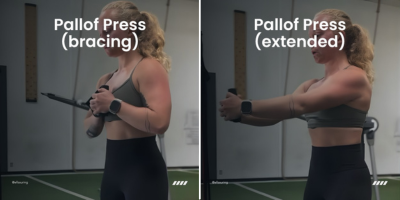
Pallof Press
This is a core-focused movement, which is even better to highlight the same principle.
Without bracing:
Torso rotates or shifts
Hips move
You lose control
With bracing:
Body stays still
Core resists rotation
You build true stability
Think: Nothing moves except your arms.
The Takeaway
Your core isn’t just something you train but it’s something you use in every lift.
If you’re not actively maintaining position, your body will compensate whether you notice it or not.
So instead of asking:“Do I feel this in the right muscle?”
Start asking:“Am I holding the right position?”
Because that’s what determines whether you’re actually training what you think you are.


Comments